Loading advertisement...
Advertisement Popup
Advertisement content with navigation options
Loading advertisement...

26-06-2026
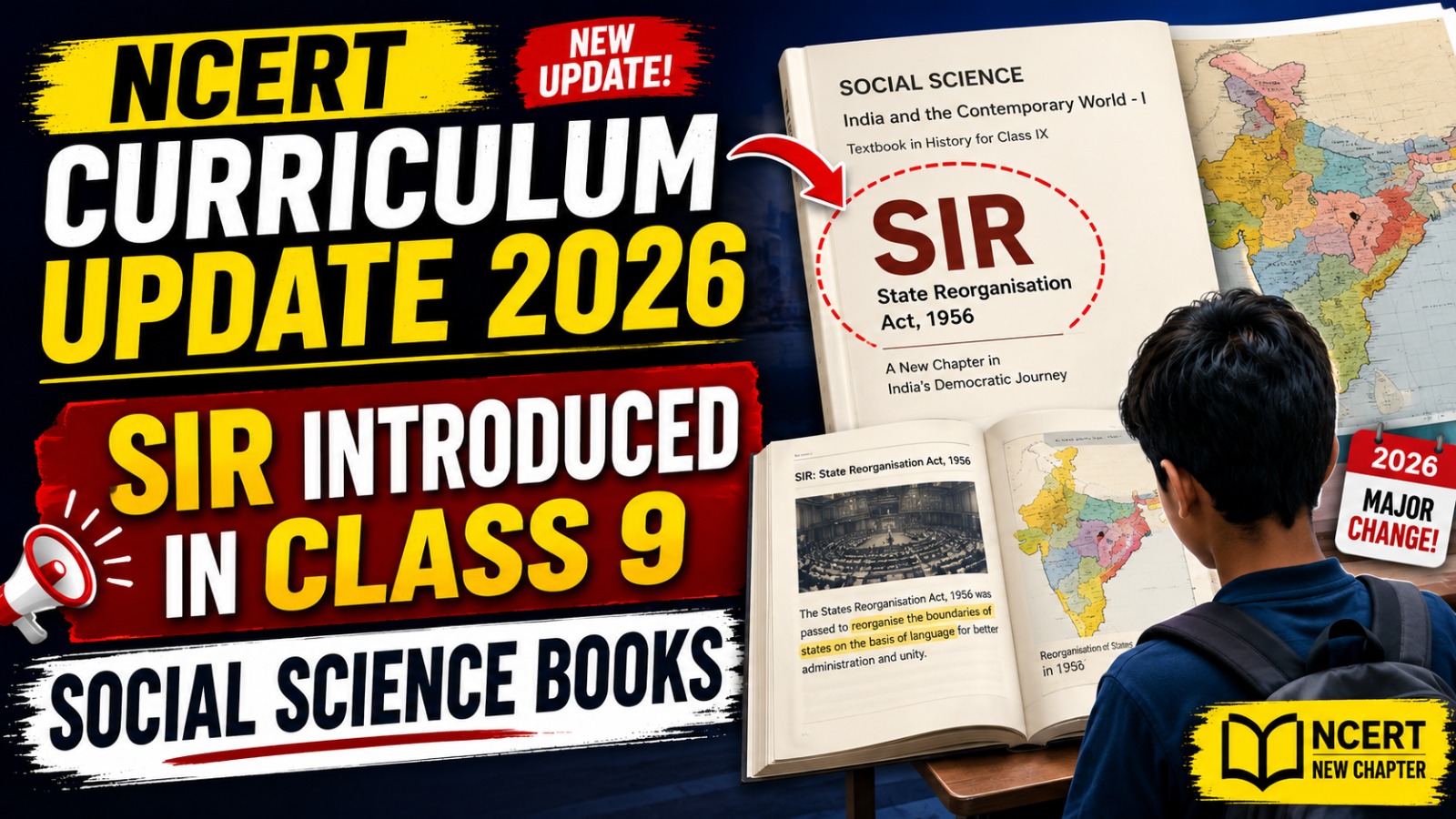
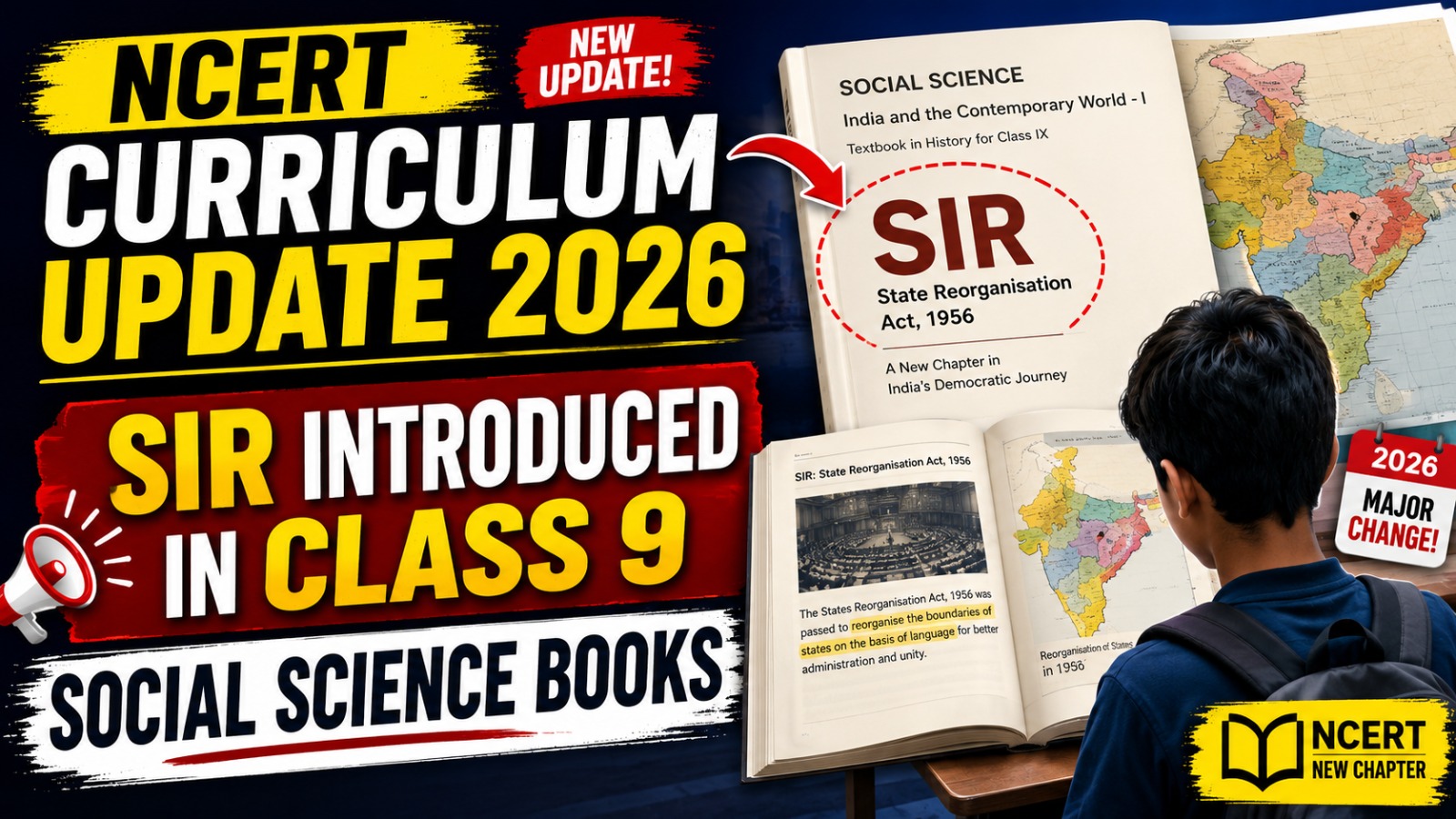
The National Council of Educational Research and Training (NCERT) has reportedly introduced SIR (Special Intensive Revision) as part of the Class 9 Social Science curriculum, marking a significant update in the educational framework for the academic year 2026–27. This development has generated widespread discussion among educators, students, parents, and policymakers across India.
The inclusion of SIR in the Social Science syllabus reflects NCERT's ongoing efforts to align school education with contemporary social, political, and democratic processes. The new curriculum aims to provide students with a deeper understanding of electoral systems, governance structures, civic responsibilities, and democratic participation.
In this article, we explore what SIR is, why NCERT has included it in Class 9 Social Science textbooks, how it may affect students, and what educators are saying about this important curriculum update.
SIR, or Special Intensive Revision, is a term commonly associated with the process of revising and updating electoral rolls and ensuring the accuracy of voter registration data. The process plays a crucial role in maintaining transparent and democratic electoral systems.
By introducing this topic into the Class 9 Social Science curriculum, NCERT aims to familiarize students with the functioning of democratic institutions and the importance of citizen participation in governance.
The inclusion of SIR also supports broader educational goals related to civic awareness, constitutional values, and democratic engagement.
The decision to include SIR appears to be part of NCERT's larger educational reform agenda under the framework of the National Education Policy (NEP) 2020.
Several factors may have influenced this decision:
1. Strengthening Civic Education
One of the primary goals of Social Science education is to help students understand:
The introduction of SIR provides students with practical insights into how democratic systems function.
2. Promoting Constitutional Awareness
India's Constitution emphasizes active citizenship and democratic participation. By learning about electoral revisions and voter registration processes, students develop a stronger appreciation for constitutional institutions.
3. Encouraging Critical Thinking
Modern education increasingly focuses on analytical skills rather than memorization. Topics such as SIR encourage students to:
4. Aligning Education with Contemporary Issues
Educational experts believe that school curricula should reflect current social and political realities. Introducing SIR enables students to connect classroom learning with real-world democratic practices.
The addition of SIR to the Social Science syllabus may help students understand several important concepts:
Electoral Systems
Citizenship and Rights
Government Administration
Students can gain knowledge about:
Democratic Values
The subject encourages students to understand:
The inclusion of SIR is expected to have both academic and practical benefits.
Students will gain a deeper understanding of India's democratic system and their future role as responsible citizens.
Social Science topics encourage:
Rather than studying only historical events, students will also learn about current governance mechanisms and administrative systems.
Knowledge of democratic institutions, governance, and constitutional systems is valuable for various competitive examinations, including:
Many educators have welcomed the inclusion of SIR in the curriculum, stating that:
Interactive classroom activities, debates, projects, and case studies may help make the subject more engaging for students.
Despite its potential benefits, the inclusion of SIR may present several challenges:
Teacher Training
Teachers may require:
Curriculum Adaptation
Schools may need to:
Student Engagement
Educational institutions will need to ensure that complex civic concepts are presented in a student-friendly and practical manner.
The National Education Policy 2020 emphasizes:
The inclusion of SIR in Class 9 Social Science aligns with these educational objectives and reflects a broader effort to modernize India's education system.
If implemented successfully, this curriculum update could help:
As students become more familiar with governance systems and democratic institutions, they may be better prepared to participate actively in society.
Q1. What is SIR in the NCERT Class 9 curriculum?
SIR refers to Special Intensive Revision, a process related to electoral roll updates and democratic administration.
Q2. Why has NCERT introduced SIR in Social Science?
The aim is to improve civic education, democratic awareness, and students' understanding of governance systems.
Q3. Will SIR be included in examinations?
The examination pattern will depend on the final curriculum and assessment guidelines issued by NCERT and educational boards.
Q4. How does SIR help students?
It helps students understand democracy, governance, citizenship, and constitutional values.
Q5. Is this change part of NEP 2020 reforms?
Yes. The update aligns with the National Education Policy's focus on holistic, practical, and experiential learning.
The introduction of SIR in NCERT Class 9 Social Science textbooks represents an important step toward strengthening civic education in India. By helping students understand democratic processes, electoral systems, and constitutional values, NCERT aims to create a generation of informed, responsible, and socially aware citizens.
As schools prepare to implement the updated curriculum, educators, students, and parents will closely monitor how these changes shape the future of Social Science education in India.
✅Stay connected with Skool Guru for more educational tips, exam strategies, and academic guidance.
📞 Need help? Contact our mentors today!
Visit: www.skoolguru.in




.jpg)